Navigation

Showing posts with label special needs. Show all posts

Saturday, June 27, 2020

Special Needs Parents Don't Get Ice-cream

Regarding Emma


Over the summer break, we went away with friends to a caravan park. 

One afternoon, everyone decided it would be fun to take the kids for a walk down the main street to get an ice-cream.

I love ice-cream. But I couldn't go.

Firstly, Emma doesn't have the physical stamina to walk long distances and she is getting so darn big that it's impossible for me to carry her when she gets tired.

Secondly, it's not safe for Emma to be so close to a main road as she has no awareness of danger. It's especially dangerous in a large group where I know I'm likely to get distracted and it only takes a second for her to escape and run for the road.

Thirdly, we can't take Emma to the shops as, like the eternal toddler she is, runs around impulsively grabbing everything and then has a meltdown when denied what she wants which could be anything from a lolly to the EFTPOS machine.  I'm not overly concerned by the judgement that a 7 year-old writhing on the floor attracts; but I AM concerned about her breaking or damaging something that belongs to someone else.

Lastly, Emma still needs to be spoon fed certain foods and ice-cream is one of those. Most people don't know this as it seems to attract the most disapproval from others, particularly other children, so we never do this publicly. Spoon feeding and nappy changing are 2 things we keep private to try and maintain some dignity for Emma.

I watched everyone walk away and realised I was quite literally alone.

I wanted an ice-cream.

I looked at Emma sitting on the camping chair; she was blissfully unaware that she was missing out. Thank God for that, I thought. 

I reassured myself, "It's okay. It's just an ice-cream"......

But it wasn't just an ice-cream. It was a 'cold' (pun intended) reminder of the isolation that special needs families face, not because we're rejected or lack support, but simply because we can't do what other families do so easily. 

We get left behind: literally and figuratively.

We knew that by attempting this camping trip that it would be a struggle with Emma and we knew it would mean being confined to the caravan park.

It was a dark reminder that as life moves forward for everyone else; time is standing still for us. 

As people move forward and celebrate their children's achievements, we are still stuck at home with the 'baby' enduring sleepless nights, nappy changes and tantrums but without the redeeming 'cuteness' or hope that the stage will pass. 

While most families can enjoy activities together,  our family has no choice but to be constantly split in two with one parent left behind with Emma. 


It was at this moment, one of my friends who I assumed had left, appeared and said that she'd decided to stay with me. I literally breathed a sigh of relief. Her gesture felt like healing ointment on my aching heart. 

I admitted I was trying really hard not to feel sorry for myself. She suggested we walk a few metres over to the camp kiosk and get an ice-cream.

When we got there, I noticed the freezer had Ben&Jerry's which is actually my favourite ice-cream.

Suddenly, I had a profound thought which I believe was God speaking to me.

 "See, you didn't miss out on an ice-cream. It's just different"..........

I became teary with a sense of joy and thankfulness that I hadn't missed out; my father God was with me and had simply provided a 'different' ice-cream. It wasn't the one I wanted and it was different to the one everyone else got - but it was a pretty awesome ice-cream that I loved. 


Finding the joy and hope in 'different'

If, as special needs families, we focus too much on what we miss out on we will live in a perpetual state of resentment towards our child. Feelings of loneliness and isolation will threaten to blind us from seeing the joy in front of us. 

We must learn to 'tune in' to the goodness in our experience (and others) rather than just 'tuning out' the judgement, rejection and loneliness.


It's a subtle difference but has a profound impact on how we feel. 

If we simply 'tune out' the hurt, we go into survival mode: where we find ourselves in a constant state of putting out spot fires which can be exhausting (mentally). Alternatively, we can learn to 'tune in' to the goodness, hope and joy in our experience, and move from simply surviving to thriving. Joy is strong and powerful and blankets (covers) the ever-present spot fires of our experience.

In this way, we are free not just to accept, but enjoy the ice-cream we've been given!  

Whenever I feel my thoughts descending, I stop and find something to be thankful for. 💗

If I feel lonely in my experience, I remind myself of all the other mum's out there walking the same road.....

If I'm upset because someone has been unkind, I try and bring to memory a time when someone was kind and my heart was warmed.....

When I feel like all my strength is gone, I remind myself of how God has always renewed my strength when I've been drained....

When I find myself saying, "I can't do this", I remember how many millions of times I've said that and yet I've just kept on doing it....

And, I will keep on doing it.  So will you. 

Because whether our ice-cream is the standard variety, gourmet, a Bubble O'Bill, soy flavour or vegan.....

....it's still awesome - it's just different. 


Sunday, June 10, 2018

To the mum of the child without special needs......


The other day, I watched Emma at the playground climbing up a rope ladder. She moved slowly and deliberately making sure her arms compensated for her weak leg muscles and that her grip was strong enough to compensate her poor balance that could see her topple off at any moment. 

I watched with pride as she struggled, persisted and made it to the top.

What an achievement for a child who was told she may never walk!

With a renewed sense of confidence, she came down the slide ready to attempt the challenge again. 

But this time, two children appeared who also wanted to climb. One boy began screaming angrily at her to "Hurry up!" while the little girl closest to her began pushing her in frustration. Emma knew she would fall if she tried to move too quickly so she froze and held on for dear life.

Before I could intervene, I watched as the mother came to the rescue of her little girl, exasperated at having to wait, and literally picked Emma up and moved her out of the way to let her daughter climb to the top.

Surprisingly, I wasn't angry or even annoyed.

I was perplexed and disappointed.


Mum! You just missed a valuable teaching opportunity!


Mum, this was the perfect scenario to teach your child to be patient and wait their turn.

But, instead you just taught your child that HER needs are more important than the needs of others.

Mum, this was an opportunity to teach your child self-control.

But, by not correcting her exasperation, you inadvertently taught her that intolerance of others is okay.

Mum, this was a perfect opportunity to explain to your child that some kids are different and cannot climb as quickly as you.

But, by not stopping to take your daughter aside and explain special needs, you perpetuated the cultural narrative that disabled people are 'less' - that it's acceptable to simply push them out of the way.

See, it's not only my daughter that is negatively impacted in scenario's like this..........

.......it's yours as well.


See, every time you allow your child to ignore a child with special needs, exclude them or let them make a demeaning comment without correction - you empower unkindness in your child.


Of course, no parent does this intentionally which is why I'm writing this.....


When we fail to actively teach kindness and compassion and lovingly correct and discipline behavior that does not respect the rights of others, we deprive our children the opportunity to see the incredible power they have within them to make a positive difference in the world - to do good, to help, to give, to love....


Mum, in that one simple moment you thought you were empowering your daughter by pushing the disabled kid out of the way. 


But, you actually dis-empowered her by failing to point out her power to do good in that situation - by failing to teach her that instead of responding with frustration she could have chosen to say, 


"It's okay. Let me help you."


As adults, we must be very careful about the cultural narratives we model and instill in our children. This means confronting our own intolerance, judgment and attitudes towards those who have special needs or a disability. Our children will mirror our own attitudes and provide miniature reflections of our indifference and ignorance towards the needs and value of others.

In conclusion.......

Mum, if nothing else, my disabled child provides you with a powerful opportunity to teach your own child love, compassion, empathy, kindness, patience....and that people who are different are not 'less'.

Mum, as you take the time to talk to your child about mine, you give your child an amazing opportunity to learn about their power and capacity to help - to bring change, hope and happiness to others. 

Mum, in future, please don't encourage your child to ignore or push my disabled child out of the way - instead choose to seize the teachable moment to help your child grow into a better human being. 

Your child - and mine - will thank you.

Thursday, January 12, 2017

Why We Chose the GAPS diet....

GAPS diet autism

From the very beginning I knew that diet and nutrition were crucial in addressing Emma's issues. 

But which diet?


We were advised by our integrative doctor initially to remove gluten and dairy until we figured out exactly what she needed. We saw changes immediately. She was more alert and had noticeably less absence seizures. We knew we were on the right track.


There are lots of things we don't know about what has caused Emma's issues. But one thing we did know was that her mitochondria weren't functioning well. We put her on a protocol of supplements to specifically support mitochondria and saw good progress in her muscle tone and energy levels.


The current (non-mainstream) recommendation for kids with mito issues is a diet low in oxolates. We tried this for 6 months with no changes that I could attribute to the diet. She continued to be bloated after every meal and alternated constipation with horrendous explosive poo. It was clear that we were missing something. I also felt 'awkward' about the low ox diet as it had very little nutrition as foods high in oxolates like fruit and veg are also high in antioxidants which are also important in recovery.


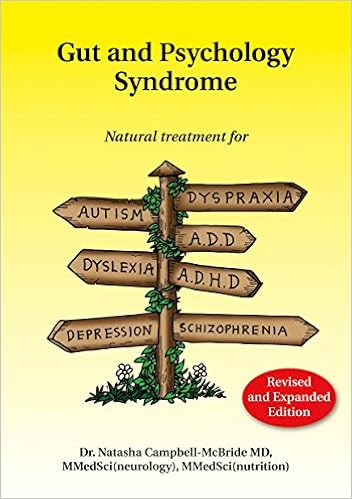
I understood the basic principles of the microbiome but had never actually read the GAPS book.


                                                        Image result for GAPS BOOK


I'm someone who need to understand the 'why' before I jump in. If I was going to attempt a diet as restrictive and time intensive as GAPS I needed to understand the science behind it.


The basic science


Your immune system is in your gut.  Your gut and brain are connected. 

If your gut health is poor then your health is unlikely to be optimal. 


Diet and lifestyle factors have a direct influence on the good or bad bacteria in your gut. Eat bad food then you end up with more bad bacteria than good. Eat good foods particularly foods with live bacteria (e.g probiotics, fermented foods) then you feed the good guys. 


More good bacteria equals a healthy gut and a healthy gut equals a healthy brain. 


I knew Emma had lots of inflammation in her body which included in her brain. Science has always believed that the brain was incapable of being 'inflamed'....turns out they just discovered they were wrong. This diet reduces inflammation in the body by healing the gut.


WARNING - This diet is hard work. 


I only attempted it because I have my best buddy (my thermomix) to help me out. It requires LOTS of cooking and food preparation and organisation (not my strong suit). 


BUT.....It has been sooo worth it!


Why?


After the initial detox which was horrendous we noticed improvements in Emma's social skills. She became more aware of other kids and started finding ways (without words) to interact with them. This was exciting - an obvious change. 


It has also helped my other kids by beginning to heal their leaky guts. How do I know? Because after years of being the same weight they have stacked on the kilo's in just 8 weeks! We have also not had one tummy ache since starting the diet and kids just seem happier. 


I've been doing it too - and it feels awesome. 


In my humble opinion, if you haven't experienced success with other 'diets' then GAPS is one worth exploring for your family especially if there are special needs or health issues.


Although I believe a holistic approach is best in recovering special kids I've seen firsthand that diet is crucial in working towards healing. 


Be encouraged xo 


Wednesday, December 28, 2016

Emma's Progress - 6 months on..........


When we began Emma's NACD neurodevelopmental program in July, I planned to blog once a month. Little did I know that with the demands of the program I would struggle find time to eat let alone sit down at the computer to write. 

So...better late than never! 

Emma is making progress but admittedly, at a slower pace than I would like. But I am also (slowly) learning to celebrate the 'little things' and find joy even in the darkest moments.

There is so much more to this 'program' than the work and learning. I feel like everyday I go into battle for Emma. It's not easy. It's not always fun. But the hope that we will 'win' this battle is what keeps us moving forward. 


Emma's Progress


Significant improvements in muscle tone 


Since beginning the deep pressure and movement exercises as part of her program Emma is no longer floppy AT ALL and noticeably stronger. 


Significant improvements in motor planning / coordination / balance


Emma used to fall over constantly. She would walk into things, trip over things but not anymore! She now has good body awareness and is significantly more confident with climbing, playing on the playground and can now carry things without toppling over. She has started trying to stand on one leg and often tries to imitate dance moves she sees when watching music videos. 

Just this week she jumped for the first time (using 2 feet) on the trampoline! 


Improvements in receptive language


After feeling like she was never going to get it, Emma has begun processing 2 pieces of information. She is also able to recognize over 100 flashcards whereas before we started the program I was unsure of how many pictures / objects she recognized if any.

Improvements in auditory processing


We are finding Emma is responding more consistently to requests and is processing information quicker.

She hears everything without her hearing aids and often tells me if she 'hears' something by looking at me and putting her hands near her ears. This morning as we did our running she did this when she heard a dog bark in the distance. 6 months ago she wouldn't have been as 'tuned' in to hear the sounds around her.


Improvements in social Skills 


After starting the GAPS diet in October we began noticing improvements in her social skills particularly her ability to interact with other kids. Adults are mostly kind and patient but generally young kids are not so it is very difficult for a child like Emma to engage in meaningful interactions with other kids. But now she is initiating social interactions and is able to 'maintain' interaction for a short period of time. She used to engage for 10 seconds and then wander off on her own but we are now noticing she is identifying kids her own age, approaching them and engaging happily in parallel play with the odd moment of co-operative play. 

We also recently saw our first glimpse of 'compassion' where she realised she'd (accidentally) hurt another child and cried along with the hurt child before putting her arm around him as if to say 'sorry'. Gold. 

All of these areas still need work but we celebrate her progress! 

How I manage the program.....


It only took me about 2 days to realise I couldn't do this program on my own.

We now have 3 amazing volunteers who come weekly to help with Emma in various ways depending on their experience and expertise. Their willingness to give of their time to help our family is actually what gives me strength on those dark days. These volunteers help remind me that even when the world seems harsh and unfair there is still goodness.

I admit we still struggle to get all the 'program' done 7 days a week. We are finding that as Emma moves through stages in her development she is becoming more like a 'toddler' and less like a 'baby'. This means meltdowns, tantrums and defiance and boy, is that girl stubborn. There are some days where it takes more like 3 hours to get program done.

We are praying that 2017 will be a year of continued growth and development for Emma but feel we need a miracle when it comes to her speech. So friends, I ask you to join us as a family in praying that our precious girl will find her voice in 2017 and we will be sure to give God the glory for his power at work in Emma's life.

Thank you from the bottom of my heart all for your kind words, prayers and encouragement in 2016. I am truly thankful. 

Happy New Year everyone! xo 

Friday, July 29, 2016

4 weeks on - Celebrating each little step forward


This week we went to the park. 

I watched Emma run and explore and felt like I was looking at a new child. 

Tears sprung to my eyes as I experienced a deep sense of joy and thankfulness.


We are 4 weeks into our NACD neuroplasticity program.

The program takes 3 hours daily to complete and should be completed 7 days a week. I can only manage 6 days and some days struggle to get the full 3 hours done. We are managing about 80% of the total program with the goal of getting to 100% next month. 

She has a long way to go but the changes are remarkable. 

Her muscle tone and strength are noticeably improving and she is more aware of her body thanks to the frequent deep pressure input. She is running faster and moving without as much hesitation. I also noticed her hands are hanging lower when she walks as opposed to her 'dinosaur arms'.

Amazingly she has gained 3kg with no changes to diet / exercise.  At first I was concerned until I realised that it's because her (low tone) jelly fish arms and legs are gaining muscle! 


There's a brightness in her eyes. 

She is starting to notice everything.  She responded to plane flying overhead, the sound of the train in the distance, a bird sitting on a branch and distant dog barking (all without her hearing aids). At one stage she took my hand and led me to a tree to show me and then pointed upwards like she was explaining to me that it was really tall.

This kid is excited about life and the world around her.


We've seen positive changes in her listening and responding (auditory processing) particularly her ability to imitate sounds and words. She has surprised us with lots of new words at random times like "Aunty Trace" and "Roof". They don't always 'stick' but we celebrate each new sound or word as she gets one step closer to normal speech. 

Other changes we've initiated as well as the program have been increasing her dose of fish oil and making sure she has at least one hour a day of active play outside. We have also taken youtube off her ipad so she is only able to watch 'therapeutic' (homemade) videos which are designed to help feed her more language, useful directions and self-help skills. It's all about intensity - we are using every opportunity to help her learn and develop.

Emma has now adjusted to the new routine and knows what to expect during 'learning time' but we are dealing with some mammoth tantrums and defiant behavior which we were told to expect as she begins to make steps developmentally. 

We are celebrating every little achievement however small as it brings us one step closer to our destination. 

The journey is hard - but we're moving in the right direction.

Be encouraged xo 

Friday, July 8, 2016

Amazed and Exhausted - A New Beginning


We have completed our first official week of our NACD neuroplasticity program

This marks not just the beginning of a new therapy method for Emma but a huge leap of faith for our family. 

Are we crazy taking on full responsibility for Emma's development? Is it going to'fix'Emma? What if it doesn't? How on earth are we going to manage such an intensive program with all our other commitments? Can I actually do this? 

So......How was our first week? Amazing....and exhausting.


The amazing bit....


It was amazing watching Emma learn new skills almost instantly. Within 3 days she had mastered most of her receptive language tasks. I discovered she understands a lot more than I realise and when focused and engaged is capable of absorbing lots of new information.

It was also amazing because I finally feel like we've found something that is going to deliver results. I'm feeling amazingly positive!

But I'm also amazingly exhausted......


The exhausting bit....


It was exhausting because her 2 hour program actually takes 3 hours daily to complete. started getting up an hour earlier (which is like torture for me) and then had to wrestle a strong-willed 4 year old who didn't want to do her 'learning'. 

I seem to have met my match in the stubborn department. 

After the first 3 days all I could think was...HELP!!!!!

I knew this was going to be a challenge. It means a change of routine and structure for our family. It requires a huge commitment from me which I need to  juggle with my other commitments. 

But...... I embrace this challenge motivated only by deep love and devotion to this child that God has entrusted to me.

I wouldn't desire this without love. I couldn't do this without love. 

I can't do this without God.   

I'm being honest and admitting I'm exhausted.

I'm certain it will get easier as we all adjust to a new routine and new way of life.


"Never despise the day of small beginnings.......for the Lord rejoices to see the work begin" 

Zechariah 4:10

Be encouraged xo 


Wednesday, June 15, 2016

Tips For Success With Alternative Treatments


Last weekend this informative piece appeared in our newspaper. The title "Charlatans target NDIS" with the subheading "Parents of autistic kids warned of bogus treatments". It then lists the treatments parents should be warned of and why.

Firstly, the only treatment on there that provides services to NDIS clients is osteopathy. These practitioners are hardly 'targeting' the NDIS - they aren't even part of the scheme.

Secondly, the article says that these therapies claim to 'cure autism'. I'm not aware of these therapies claiming to cure anything. Australian consumer law states it is illegal to make false or misleading claims about a product / service so you can't claim to cure anything - even doctors can't! These therapies are treatments that address autism and related disorders. None of them are a cure in and of themselves. And really, if you think one chiropractic adjustment is going to cure autism then you probably haven't done enough research. 

Autism and related disorders are multi factorial - meaning there are lots of things going wrong in the brain and body. There are multiple areas to addressed - this is the  reason why alternative therapies are also called "complimentary" therapies - they compliment each other to address the many different factors involved in disease.


Tips for success with alternative therapies


  • Educate yourself. 


Do your research. Read books, journals, medical journals, join online forums...you'll find some alternative therapies have a larger evidence base then others. We have avoided homeopathy for that reason but I know many families who sware by it. It's an individual thing.

  • Trust Yourself


As you educate yourself - trust yourself! Trust in the knowledge you have acquired. This trust is very important as your inevitably encounter opposition.

One of Emma's specialist literally LOL'd when I said we would be researching alternative therapies. This was after he told me there was nothing he could do for Emma and that I should just focus on my healthy children. He was basically saying the better option to 'alternative therapies' was to just give up. I felt sad thinking about how many parents would give up fighting at that point. 


  • Trial and error

Not all therapies will work for your child because each child is different with a completely different genetic profile. 

Contrary to some beliefs alternative medicine is not harmful. You are a thousand times more likely to die from a reaction to a pharmaceutical drug than a natural supplement. It's insanity to suggest a gluten free or dairy free diet is dangerous compared to taking a drug that has has been inadequately tested.

It can take time and patience to find what works for your child. Some things work - some things don't. This is part of the journey.


  • Find out about others experiences

I know a mother with a nonverbal child with autism prone to violent outbursts and not sleeping. Another parent suggested an essential oil. She laughed it off. A year later after trying all sorts of drugs she was so desperate she gave in. On the first day he had noticeably less tantrums and started sleeping through the night. She admitted she had no idea how it worked...but she was just so thankful it did!

As parents, we learn about parenting from discussing and sharing our experiences with other parents. There's no harm in having conversations and finding out about what other parents are having success with as long as we understand that with any parenting advice, it may not work for our child.

A great source of information is the recovering kids biomedical healing facebook page. It has over 85,000 members from all around the world and is a great community of like-minded parents!

Lastly, it's not popular to choose an alternative path.  'Mainstream' means going with the flow, following the majority and believing what is widely accepted as true. Going against the flow means asking questions, challenging the status quo and considering the motives and agendas behind much of 'mainstream' thinking.

Going against the flow isn't easy but we know it's the right thing.

Be encouraged xo 

Tuesday, May 17, 2016

The Missing Piece of the Puzzle For Kids with Special Needs - Neuroplasticity Therapy


Let's be honest. In the world of disability we're all feeling our way around in the dark.
There's no quick fix - no magic bullet. Many of us have been told that the best we can do for kids is to manage 'symptoms' with therapies and medications. 
But what if we could address the cause?


But isn't the cause genetics?


Genetics is complicated - even a geneticist will tell you that they understand a limited amount. When a doctor says "It's genetic..." we often assume that means "Badluck. You can't do anything about it" but that's simply not true.

Two of my boys have a lazy right eye which is apparently genetic. So what do we do? Firstly, they wear glasses to help the symptom of poor vision . But we actually want to treat the 'cause' of the poor vision so we patch the left eye and they do eye exercises (which are actually brain exercises) to stimulate parts of the brain responsible for the lazy eye. Their vision is steadily improving and in time, the brain will correct itself and the eye will work normally. This is neuroplasticity at work.


A genetic disorder does not define the potential of our children. We can't allow anyone to speak limitations over them. We need to believe the 'potential' is there for restoration and healing if we are to see growth and development. 


If we don't believe the potential is there then we begin the fight for our special needs child already defeated. 

As parents we already know our children's challenges but we are well within our right to hope for an outcome that goes "above and beyond what we can ask for or imagine".


I read so many articles detailing factors involved in Emma's disability that I thought MY brain might explode. At one point I wondered if understanding Emma was quite simple: Her brain doesn't work. 

The simple thought "Her brain doesn't work" lead me to information about neuroplasticity.

Neuroplasticity is the brain's ability to change both its physical structure and functional organisation in response to changes and experiences. When new connections start being made they fundamentally change the brains capacity to learn and function.

So when we talk about potential we are being literal. The brain DOES have the potential to change and work 'better' with the right input.

Where to start? Feed the brain - the right food and the right supportive supplements. If the brain has the nutrition it needs to function then that's a good place to start.

Secondly, explore the options when it comes to neuroplasticity methods and neurodevelopmental programs. We have chosen NACD but there are other options out there that offer hope for families. 


Be encouraged xo 

Friday, May 6, 2016

How Kids Benefit From Having a Sibling With Special Needs


A child with special needs brings a unique challenge to any family dynamic.

It's easy as parents to worry about how much siblings miss out and fear they may grow to resent their special sibling (and possibly us parents too!).


However, many of these worries are unfounded as I see in my family just how much my kids are learning and growing from the whole experience.


Special needs brings families together


We're a family. We're a team.

I don't shelter my kids from what is happening. They are included in our appointments. They see me cry. They participate in therapy sessions. I answer all their questions and we pray for Emma together. This openness and transparency has really helped them embrace the challenge rather than provoke anxiety because they don't understand what is happening. It also reduces opportunities for resentment because they feel included.


When siblings are included in the recovery process they are more likely to embrace the journey rather than resent it. 


Kids develop compassion when they have a sibling with special needs


Although not easy, having a sibling with special needs is part of the story that shapes who they are.

My 8 year old told me recently he wants to become an engineer and design an indoor playcafe for kids in wheelchairs. This was the point where I realised how much my kids are learning from this journey and how this is shaping who they are in a good way!


Siblings develop compassion which translates into a desire to help others.


My boys are brilliant little therapists. Each one of my boys will at different times cuddle up with Emma on the couch and read her a book, sing to her or take her into the room to do 'therapy'. They put her on the swing and correct her gently when she hits or throws something. They encourage her to speak and have more patience than I do.


Kids develop resilience when they have a sibling with special needs


Siblings are forced to develop resilience as they learn the world isn't a perfect place and develop ways of coping.


This maturity and resilience will help them deal with the challenges that inevitably arise in life.


Siblings learn how to be kind, selfless and put others first


Our consumer culture tells us we should always think about ourselves, find our inner peace, make ourselves happy etc...The bible tells us that true 'inner peace' comes from knowing Jesus and living a life of service to others. Thinking of ourselves LESS is actually better for us.

Dr Caroline Leaf details in her book "Switch on your brain" how helping others actually makes us smarter and supports brain development.


Siblings learn the hard way that sometimes we need to put others first.


This is not a bad thing. Kids these days are incredibly entitled and spoilt (mine are no exception) and it's a challenge to counteract this culture. Having a sibling with special needs forces kids to focus less on themselves and helps develop their character.


Having a sibling with special needs obviously has its challenges but seeing as it's beyond our control we can make a choice to focus on the positive to see how God really can work "all things together for good".


Be encouraged! xo


Saturday, April 30, 2016

Introducing Recovering Emma

neuroplasticity therapy


Our heart is to see our daughter with special needs reach her full potential.  

We want to see her live a life not limited by her diagnosis but in the fullness of all God has planned for her.


The word 'recover' means to return to a normal state of mind, health and strength. 

Emma's name means to be 'whole' and 'complete'.


This blog is a way we can keep a personal record of Emma's progress and offer encouragement and hope to other parents on similar journeys along with the therapists / teachers that support them.

The field of neuroplasticity reveals the brain has been designed in such a way that it can change and heal itself. There is hope. 

In my work in disability, I've seen neuroplasticity at work. I've seen children with autism recovered after being told their prognosis was life-long. I've also seen children improve way beyond expectation with the commitment and dedication of loving parents. I'm so thankful to know these amazing families and to have this insight. Sharing their journey has made my journey a little easier.

After years of research I have shared our 'recovery diet' on the page What we do.

Information I will blog about include:


  • Prayer & Faith


I trust that God is in control.  Whilst sickness and disability is not from him he is able in his sovereignty to "work all things together for good". Ultimately God gets the glory for Emma's healing and I'm in awe of the little miracles along the way, how he has comforted us in our grief, strengthened us in our weakness and lead me to discover the things that will help put her back together again. 


"With man, many things are impossible...but with God ALL things are possible"
 Matthew 19:26


  • Biomed / Natural Medicine


At a basic level, if we want brains to work we need to make sure they are getting the nutrition they need and not filling them with stuff that impairs function. Topics I'll write about include nutrition, GAPS, diet, supplements and alternative therapies that have worked for us.


  • Home based Therapy 


I plan to blog about our neurodevelopmental program and activities we do at home, music therapy, sensory diets, latest research with some home education information thrown in too.

I will also post videos so you can see what we do! 


If any of these topics interest you please subscribe to this blog or follow our recovering Emma facebook page.  


Thanks for your support as you journey with us! xo