Navigation

Showing posts with label developmental delay. Show all posts

Thursday, January 12, 2017

Why We Chose the GAPS diet....

GAPS diet autism

From the very beginning I knew that diet and nutrition were crucial in addressing Emma's issues. 

But which diet?


We were advised by our integrative doctor initially to remove gluten and dairy until we figured out exactly what she needed. We saw changes immediately. She was more alert and had noticeably less absence seizures. We knew we were on the right track.


There are lots of things we don't know about what has caused Emma's issues. But one thing we did know was that her mitochondria weren't functioning well. We put her on a protocol of supplements to specifically support mitochondria and saw good progress in her muscle tone and energy levels.


The current (non-mainstream) recommendation for kids with mito issues is a diet low in oxolates. We tried this for 6 months with no changes that I could attribute to the diet. She continued to be bloated after every meal and alternated constipation with horrendous explosive poo. It was clear that we were missing something. I also felt 'awkward' about the low ox diet as it had very little nutrition as foods high in oxolates like fruit and veg are also high in antioxidants which are also important in recovery.


I understood the basic principles of the microbiome but had never actually read the GAPS book.
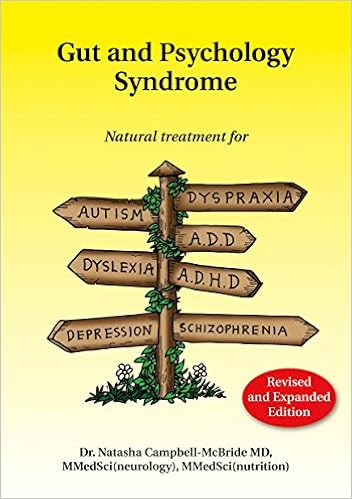

                                                        Image result for GAPS BOOK


I'm someone who need to understand the 'why' before I jump in. If I was going to attempt a diet as restrictive and time intensive as GAPS I needed to understand the science behind it.


The basic science


Your immune system is in your gut.  Your gut and brain are connected. 

If your gut health is poor then your health is unlikely to be optimal. 


Diet and lifestyle factors have a direct influence on the good or bad bacteria in your gut. Eat bad food then you end up with more bad bacteria than good. Eat good foods particularly foods with live bacteria (e.g probiotics, fermented foods) then you feed the good guys. 


More good bacteria equals a healthy gut and a healthy gut equals a healthy brain. 


I knew Emma had lots of inflammation in her body which included in her brain. Science has always believed that the brain was incapable of being 'inflamed'....turns out they just discovered they were wrong. This diet reduces inflammation in the body by healing the gut.


WARNING - This diet is hard work. 


I only attempted it because I have my best buddy (my thermomix) to help me out. It requires LOTS of cooking and food preparation and organisation (not my strong suit). 


BUT.....It has been sooo worth it!


Why?


After the initial detox which was horrendous we noticed improvements in Emma's social skills. She became more aware of other kids and started finding ways (without words) to interact with them. This was exciting - an obvious change. 


It has also helped my other kids by beginning to heal their leaky guts. How do I know? Because after years of being the same weight they have stacked on the kilo's in just 8 weeks! We have also not had one tummy ache since starting the diet and kids just seem happier. 


I've been doing it too - and it feels awesome. 


In my humble opinion, if you haven't experienced success with other 'diets' then GAPS is one worth exploring for your family especially if there are special needs or health issues.


Although I believe a holistic approach is best in recovering special kids I've seen firsthand that diet is crucial in working towards healing. 


Be encouraged xo 


Tuesday, August 30, 2016

Addressing Developmental Verbal Dyspraxia


The more we continue Emma's neuroplasticity program, the more aware we become of her motor planning issues particularly related to speech. 

Emma has a few words but speaks mainly in approximations. Most words or phrases are so unclear not even I understand them. She has the desire to communicate and makes frequent attempts to use language but nothing recognisable comes out. She understands the rhythm of language perfectly and will imitate syllables but cannot make the correct speech sounds.  She also gets 'stuck' on the motor plan of particular sounds.

The word used to describe these symptoms is Dyspraxia. It basically means a problem in the area of the brain responsible for motor planning and coordination. Dyspraxia affects physical movement but can also impact movement required for speech. 


So what are we doing? 


Oral Motor Therapy


NACD provides us with oral motor exercises we do twice daily. These exercises involve trigeminal stimulation (massage), facial stimulation, mouth stimulation as well as various chewing and tongue exercises. 

We use chewy tubes and a myomunchee as part of our therapy. 

We also use ipad apps such as speech therapy for apraxia to work on specific sounds and we do lots of face-to-face work so that Emma can see the correct lip, teeth and tongue movement needed for particular sounds. I continually reinforce the initial sound of words e.g b-b-b-ball, g-g-g-girl. 


Bio-med Dyspraxia Protocol


We have just begun this protocol created by Kelly Dorfmann whose research looks at how different types of fat affect the brain.

It includes three key supplements

All supplements need to be given at the same time as they work together. 

Music Therapy


As a music therapist, I incorporate lots of music into our program.

I use drumming techniques to help develop Emma develop a strong sense of internal rhythm which is important for speech and language development. 

We also use familiar songs to develop speech and language leaving out the ends of phrases for her to fill in. e.g "Twinkle Twinkle little -----". This is a music therapy technique that many speech therapists use due to its effectiveness. Parents can easily incorporate this technique into their daily lives. 

Dyspraxia is one piece in the puzzle for Emma - but we look forward with hope to the day that all the pieces fit together!


Tuesday, May 17, 2016

The Missing Piece of the Puzzle For Kids with Special Needs - Neuroplasticity Therapy


Let's be honest. In the world of disability we're all feeling our way around in the dark.
There's no quick fix - no magic bullet. Many of us have been told that the best we can do for kids is to manage 'symptoms' with therapies and medications. 
But what if we could address the cause?


But isn't the cause genetics?


Genetics is complicated - even a geneticist will tell you that they understand a limited amount. When a doctor says "It's genetic..." we often assume that means "Badluck. You can't do anything about it" but that's simply not true.

Two of my boys have a lazy right eye which is apparently genetic. So what do we do? Firstly, they wear glasses to help the symptom of poor vision . But we actually want to treat the 'cause' of the poor vision so we patch the left eye and they do eye exercises (which are actually brain exercises) to stimulate parts of the brain responsible for the lazy eye. Their vision is steadily improving and in time, the brain will correct itself and the eye will work normally. This is neuroplasticity at work.


A genetic disorder does not define the potential of our children. We can't allow anyone to speak limitations over them. We need to believe the 'potential' is there for restoration and healing if we are to see growth and development. 


If we don't believe the potential is there then we begin the fight for our special needs child already defeated. 

As parents we already know our children's challenges but we are well within our right to hope for an outcome that goes "above and beyond what we can ask for or imagine".


I read so many articles detailing factors involved in Emma's disability that I thought MY brain might explode. At one point I wondered if understanding Emma was quite simple: Her brain doesn't work. 

The simple thought "Her brain doesn't work" lead me to information about neuroplasticity.

Neuroplasticity is the brain's ability to change both its physical structure and functional organisation in response to changes and experiences. When new connections start being made they fundamentally change the brains capacity to learn and function.

So when we talk about potential we are being literal. The brain DOES have the potential to change and work 'better' with the right input.

Where to start? Feed the brain - the right food and the right supportive supplements. If the brain has the nutrition it needs to function then that's a good place to start.

Secondly, explore the options when it comes to neuroplasticity methods and neurodevelopmental programs. We have chosen NACD but there are other options out there that offer hope for families. 


Be encouraged xo 

Saturday, April 30, 2016

Introducing Recovering Emma

neuroplasticity therapy


Our heart is to see our daughter with special needs reach her full potential.  

We want to see her live a life not limited by her diagnosis but in the fullness of all God has planned for her.


The word 'recover' means to return to a normal state of mind, health and strength. 

Emma's name means to be 'whole' and 'complete'.


This blog is a way we can keep a personal record of Emma's progress and offer encouragement and hope to other parents on similar journeys along with the therapists / teachers that support them.

The field of neuroplasticity reveals the brain has been designed in such a way that it can change and heal itself. There is hope. 

In my work in disability, I've seen neuroplasticity at work. I've seen children with autism recovered after being told their prognosis was life-long. I've also seen children improve way beyond expectation with the commitment and dedication of loving parents. I'm so thankful to know these amazing families and to have this insight. Sharing their journey has made my journey a little easier.

After years of research I have shared our 'recovery diet' on the page What we do.

Information I will blog about include:


  • Prayer & Faith


I trust that God is in control.  Whilst sickness and disability is not from him he is able in his sovereignty to "work all things together for good". Ultimately God gets the glory for Emma's healing and I'm in awe of the little miracles along the way, how he has comforted us in our grief, strengthened us in our weakness and lead me to discover the things that will help put her back together again. 


"With man, many things are impossible...but with God ALL things are possible"
 Matthew 19:26


  • Biomed / Natural Medicine


At a basic level, if we want brains to work we need to make sure they are getting the nutrition they need and not filling them with stuff that impairs function. Topics I'll write about include nutrition, GAPS, diet, supplements and alternative therapies that have worked for us.


  • Home based Therapy 


I plan to blog about our neurodevelopmental program and activities we do at home, music therapy, sensory diets, latest research with some home education information thrown in too.

I will also post videos so you can see what we do! 


If any of these topics interest you please subscribe to this blog or follow our recovering Emma facebook page.  


Thanks for your support as you journey with us! xo