Navigation

Thursday, January 12, 2017

Why We Chose the GAPS diet....

GAPS diet autism

From the very beginning I knew that diet and nutrition were crucial in addressing Emma's issues. 

But which diet?


We were advised by our integrative doctor initially to remove gluten and dairy until we figured out exactly what she needed. We saw changes immediately. She was more alert and had noticeably less absence seizures. We knew we were on the right track.


There are lots of things we don't know about what has caused Emma's issues. But one thing we did know was that her mitochondria weren't functioning well. We put her on a protocol of supplements to specifically support mitochondria and saw good progress in her muscle tone and energy levels.


The current (non-mainstream) recommendation for kids with mito issues is a diet low in oxolates. We tried this for 6 months with no changes that I could attribute to the diet. She continued to be bloated after every meal and alternated constipation with horrendous explosive poo. It was clear that we were missing something. I also felt 'awkward' about the low ox diet as it had very little nutrition as foods high in oxolates like fruit and veg are also high in antioxidants which are also important in recovery.


I understood the basic principles of the microbiome but had never actually read the GAPS book.
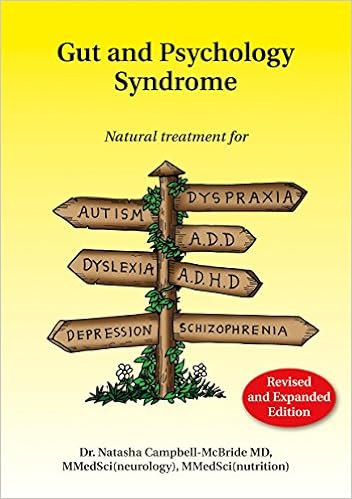

                                                        Image result for GAPS BOOK


I'm someone who need to understand the 'why' before I jump in. If I was going to attempt a diet as restrictive and time intensive as GAPS I needed to understand the science behind it.


The basic science


Your immune system is in your gut.  Your gut and brain are connected. 

If your gut health is poor then your health is unlikely to be optimal. 


Diet and lifestyle factors have a direct influence on the good or bad bacteria in your gut. Eat bad food then you end up with more bad bacteria than good. Eat good foods particularly foods with live bacteria (e.g probiotics, fermented foods) then you feed the good guys. 


More good bacteria equals a healthy gut and a healthy gut equals a healthy brain. 


I knew Emma had lots of inflammation in her body which included in her brain. Science has always believed that the brain was incapable of being 'inflamed'....turns out they just discovered they were wrong. This diet reduces inflammation in the body by healing the gut.


WARNING - This diet is hard work. 


I only attempted it because I have my best buddy (my thermomix) to help me out. It requires LOTS of cooking and food preparation and organisation (not my strong suit). 


BUT.....It has been sooo worth it!


Why?


After the initial detox which was horrendous we noticed improvements in Emma's social skills. She became more aware of other kids and started finding ways (without words) to interact with them. This was exciting - an obvious change. 


It has also helped my other kids by beginning to heal their leaky guts. How do I know? Because after years of being the same weight they have stacked on the kilo's in just 8 weeks! We have also not had one tummy ache since starting the diet and kids just seem happier. 


I've been doing it too - and it feels awesome. 


In my humble opinion, if you haven't experienced success with other 'diets' then GAPS is one worth exploring for your family especially if there are special needs or health issues.


Although I believe a holistic approach is best in recovering special kids I've seen firsthand that diet is crucial in working towards healing. 


Be encouraged xo 


Wednesday, December 28, 2016

Emma's Progress - 6 months on..........


When we began Emma's NACD neurodevelopmental program in July, I planned to blog once a month. Little did I know that with the demands of the program I would struggle find time to eat let alone sit down at the computer to write. 

So...better late than never! 

Emma is making progress but admittedly, at a slower pace than I would like. But I am also (slowly) learning to celebrate the 'little things' and find joy even in the darkest moments.

There is so much more to this 'program' than the work and learning. I feel like everyday I go into battle for Emma. It's not easy. It's not always fun. But the hope that we will 'win' this battle is what keeps us moving forward. 


Emma's Progress


Significant improvements in muscle tone 


Since beginning the deep pressure and movement exercises as part of her program Emma is no longer floppy AT ALL and noticeably stronger. 


Significant improvements in motor planning / coordination / balance


Emma used to fall over constantly. She would walk into things, trip over things but not anymore! She now has good body awareness and is significantly more confident with climbing, playing on the playground and can now carry things without toppling over. She has started trying to stand on one leg and often tries to imitate dance moves she sees when watching music videos. 

Just this week she jumped for the first time (using 2 feet) on the trampoline! 


Improvements in receptive language


After feeling like she was never going to get it, Emma has begun processing 2 pieces of information. She is also able to recognize over 100 flashcards whereas before we started the program I was unsure of how many pictures / objects she recognized if any.

Improvements in auditory processing


We are finding Emma is responding more consistently to requests and is processing information quicker.

She hears everything without her hearing aids and often tells me if she 'hears' something by looking at me and putting her hands near her ears. This morning as we did our running she did this when she heard a dog bark in the distance. 6 months ago she wouldn't have been as 'tuned' in to hear the sounds around her.


Improvements in social Skills 


After starting the GAPS diet in October we began noticing improvements in her social skills particularly her ability to interact with other kids. Adults are mostly kind and patient but generally young kids are not so it is very difficult for a child like Emma to engage in meaningful interactions with other kids. But now she is initiating social interactions and is able to 'maintain' interaction for a short period of time. She used to engage for 10 seconds and then wander off on her own but we are now noticing she is identifying kids her own age, approaching them and engaging happily in parallel play with the odd moment of co-operative play. 

We also recently saw our first glimpse of 'compassion' where she realised she'd (accidentally) hurt another child and cried along with the hurt child before putting her arm around him as if to say 'sorry'. Gold. 

All of these areas still need work but we celebrate her progress! 

How I manage the program.....


It only took me about 2 days to realise I couldn't do this program on my own.

We now have 3 amazing volunteers who come weekly to help with Emma in various ways depending on their experience and expertise. Their willingness to give of their time to help our family is actually what gives me strength on those dark days. These volunteers help remind me that even when the world seems harsh and unfair there is still goodness.

I admit we still struggle to get all the 'program' done 7 days a week. We are finding that as Emma moves through stages in her development she is becoming more like a 'toddler' and less like a 'baby'. This means meltdowns, tantrums and defiance and boy, is that girl stubborn. There are some days where it takes more like 3 hours to get program done.

We are praying that 2017 will be a year of continued growth and development for Emma but feel we need a miracle when it comes to her speech. So friends, I ask you to join us as a family in praying that our precious girl will find her voice in 2017 and we will be sure to give God the glory for his power at work in Emma's life.

Thank you from the bottom of my heart all for your kind words, prayers and encouragement in 2016. I am truly thankful. 

Happy New Year everyone! xo 

Saturday, October 29, 2016

When Parents Lose Hope.........


Recently in the media we heard about the tragic murder-suicide of a family with two children with autism.

Obviously, it's not okay to kill your children whether they are disabled or not.

But the story is interesting because it came as a shock, a surprise to those who knew the family. Why? Those parents were the 'good ones'. These were the parents who volunteered in the canteen and the classroom. They were the ones that attended school events, lived in a nice home, worked hard and appeared to be coping with the challenge of raising two children with special needs.

It's (generally) not your stereotypical dead beat parents who do this kind of thing. It's the parents who love their kids so much it hurts. It's the parents who have sacrificed for their special needs kids from day 1 because they so desperately want the best for them. It's the ones who've tried to stay positive and put on a brave face during therapy sessions and doctors appointments like they do every. single. week.


How do these things happen? 

The answer is simple  - parents lose hope.


Parents lose hope that the dreams they had for their child will ever be realised. They lose hope their child will live a meaningful life. They lose hope the behaviors will change. They lose hope that all they have sacrificed for their kids counts for something. They lose hope that tomorrow might be easier. Clearly, losing hope has devastating consequences.

Without hope - we die. Not literally but inside. 

Hope is what keeps us moving forward.


Hope is what helps us wade through the uncertainty of what the future holds to a place of rest where no matter what happens, "It's going to be okay".


One of the most challenging experiences I've ever had was working in the children's cancer ward. There were times when we believed in hope that a child would beat the odds - and they did and other times where I comforted parents while they held their dying child. It nearly broke me. Outside I did my job but inside I was struggling because I couldn't see the hope. 

I went to God desperate to understand and he showed me there is always hope but sometimes we need someone else to help us see. I thought there was no hope because the child had died but I learnt there was hope that one day the parents would experience joy again. There was hope that tomorrow would be a little easier than today and that the overwhelming grief wouldn't last forever.

As parents with children with special needs, we need hope like we need air. 

Without it, we die inside and it's hard to keep going. That's how these things happen.

Sometimes the darkness seems all consuming and we can't remember what the light looks like. That's when we need to reach out and ask someone to encourage, pray and remind us that no matter what happens - it's going to be okay. 

There's always hope. Keep going. xo