Navigation

Friday, September 3, 2021

Rare Things Happen To Real People - There Must Be Choice

Emma

This is Emma. 

She is a child of God - a joy, a delight and deeply loved. 

I have never spoken about this widely because, let's be honest, telling a story that challenges people's firmly held narrative on the safety of vaccines doesn't really win friends. 

There are many people close to us who don't know this part of our story. 

But, now is the time......

Emma was 15 months old when she was brain damaged from a vaccine. 

Obviously, I was not anti-anything when I walked into that doctor's office. 

I believed I was doing the right thing, the responsible thing, the good thing.....

But, I wasn't.  At least, not for Emma. 

I had been told the risks were minimal; adverse reactions: rare.

No one warned me that rare things happen to real people.

No one warned me that it could happen to me: to my child. 

And, when it did happen - the silence was deafening.

Doctor's were cold and dismissive. 

Only one specialist acknowledged it was caused by the vaccine and had seen this before but wasn't allowed to discuss it. 

I was left completely alone to figure out how and why this happened. 

I searched online and discovered communities of people with similiar experiences. 

People call them anti-vaxxers.

But, in my experience, they were just people like me...

... real people with real stories.

Eerily similar stories. 

Voices get loud and people tend to get angry when someone they love gets hurt. 


We adore Emma and trust in God's sovereignty, but it has been hard to reconcile that her disability was caused by a vaccine that we, by choice, administered. 

For years, I couldn't look at her baby photos as the guilt of my decision was overwhelming.

Why had I trusted so blindly? Why hadn't I asked more questions? 

Why hadn't I responded to the quiet whisper that told me not to go to that appointment? 

That was the hardest one to work through. 

Today, there is acceptance and peace about Emma's disability. 

But, sometimes I still feel sad. 

Occassionally, I feel overwhelmed that my child's body will continue to grow into a teenager and an adult and yet, her mind is frozen in time - forever, a baby.

My baby. 

It's important to know that I'm not angry.

But, because of our story, I will passionately defend people's right to choose.

Where there is a risk - there must be a choice. 

No one should be coerced by fear, bullied, threatened or forced to comply with anything that may cause themselves or their children harm.

We must be free to measure the risks. 

We must be free to listen to the quiet whisper of our own conscience.  

We must remember - Rare things happen to real people. 

There must be freedom of choice. 

Sunday, September 13, 2020

The mum who judges VS the mum who 'sees'


Recently, we had a tough day of hospital appointments. 

As many of you are aware, the hospital is not a great place for kids with ASD. It is always busy, loud, over-crowded and there is a lot of waiting. But now, due to COVID, there is no toy area or play therapists wandering around to offer even a momentary distraction.  

Emma was not content to sit and wait, so every chance she got she would sprint in the direction of the consulting suites and barge in to someone else's medical appointment (if I was a moment too slow). Other times, she would just wander quietly and aimlessly into the corridor before throwing her ipad and launching into a run. As I gave chase for the 28th time and told her to sit on the chair, I realised we were providing entertainment for the 50 or so other people waiting anxiously for their appointments.

I wondered what they were thinking while they watched....

"Look at that wild kid - why isn't that mum disciplining her?"

"Some people shouldn't have kids if they can't control them..."

"I'd smack my kid if she behaved like that" or "Thank God MY child doesn't behave like that..."

Sadly, these are not phrases I imagine people are saying, these are actual comments I've heard. And, sometimes the disapproving stares communicate more than words anyway. 

I've become very good at ignoring them. Well, most of the time. 

Once the doctor was ready, we went into the consulting room and Emma (knowing the drill) climbed up on the examination bed. The doctor then realised we had to go to a different room for a weigh / measure (due to COVID)  and this was NOT okay with Emma as it was unfamiliar. As we walked back through the waiting room, Emma's anxiety sky rocketed and she launched into a full meltdown in front of all the people sitting there. She screamed, she spat, she tried to grab any people or things she could get her hands on and then finally just threw herself on the ground wailing.

I can't pick her up anymore so after my desperate attempts to encourage her to move failed (and the doctor was waiting), I awkwardly dragged her into the room. Once in the new room, she continued to scream and throw everything she could get her hands on. At one point she even managed to remove the doctor's very nice (and probably expensive) high heel and throw it. That was a low point.


As we were leaving, mentally and physically exhausted, a mum (stranger) came up behind me and put her hand on my shoulder. She looked me in the eye and said, "I just wanted to tell you you're doing a great job". My heart flooded with thankfulness. It was such a small, simple gesture from a fellow mum but its impact was huge. I felt like someone had lit a candle in a dark room as a reminder that 'light' still existed and all was not bleak. 

As I smiled and said thankyou, her eyes filled with tears. She explained that she had been watching me and felt overwhelmed with how hard it must be. Her mumma heart filled with compassion and she felt compelled to reach out. 

My heart was softened because someone actually 'saw' me.

Most mothers only 'see' what is superficial - the behavior, the defiance, my apparent lack of 'control', her unbrushed hair....sometimes they see through the lens of their own insecurity and self-centredness and use my child to build themselves up or compare their child to mine.

But it takes an exceptional person, one who is not afraid to feel things deeply, to truly 'see' another mum and allow their heart to be filled with love and compassion instead of judgement.


Which mum are you? The one who 'judges' or the one who 'sees'?

If I'm honest, I'm probably a bit of both at times. 

But I know which mum I want to be.

When you see a mum struggling with a child with behaviors, what is your response? Are you the mum who thanks God your child is not like that or the mum who recognises the child is having a hard time and offers a gentle, reassuring smile that communicates I 'see' you. 

Be THAT mum

When you overhear a mum 'lose' it when a child is struggling with behaviors, do you awkwardly ignore them and think "I would never speak to my child like that" or do you stop and offer assistance? Sure, you risk getting a mouthful and they'll probably say no, but I know my frustration has been diffused in the past by someone 'seeing' me and offering help. 

Be THAT mum

Mum's often stare or comment disapprovingly when they see the siblings supporting Emma. I don't know if many have stopped to consider how different, and challenging their life is having a sibling with a disability. Instead of judging me, choose to be the mum that recognise that family dynamics are significantly different when you have a child with significant needs. How about recognising the 'caring' role they take on out of love for their sibling and encourage them? 


Be THAT mum.


When your child spots a disabled person or a child acting strangely and you witness the 'raised eyebrow' stare or a rude comment (and that's okay...they're still learning) you can pretend not to notice or you can seize the teachable moment and explain that some people are simply, different and encourage them to say 'hello'. 

Be THAT mum

When you hear of a family going on a holiday without their special needs child, do you judge how terrible that is? Or does your heart break a little to think of what it means for that family to not be able to include one of their own children in those special memories like you can. 

Be THAT mum

When your special needs mum friend is bit short, snippy or vague and disconnected, do you assume they're not 'coping' and rush to tell someone of your 'concern'? Or do you recognise that this mum carries a heavy burden (not her child but the fear and anxiety associated with their child) and might need a bit more of your patience and understanding than your average mum friend.

Be the mum that chooses compassion instead of accusation.

Be the mum that offers to help instead of walking the other way. 

Be the mum that chooses to build others up and not tear them down. 

Be the mum that chooses love instead of judgement. 

Be the mum that you have needed others to be for you.

Be the mum who 'sees'. 


Be THAT mum. 


Saturday, June 27, 2020

Special Needs Parents Don't Get Ice-cream

Regarding Emma


Over the summer break, we went away with friends to a caravan park. 

One afternoon, everyone decided it would be fun to take the kids for a walk down the main street to get an ice-cream.

I love ice-cream. But I couldn't go.

Firstly, Emma doesn't have the physical stamina to walk long distances and she is getting so darn big that it's impossible for me to carry her when she gets tired.

Secondly, it's not safe for Emma to be so close to a main road as she has no awareness of danger. It's especially dangerous in a large group where I know I'm likely to get distracted and it only takes a second for her to escape and run for the road.

Thirdly, we can't take Emma to the shops as, like the eternal toddler she is, runs around impulsively grabbing everything and then has a meltdown when denied what she wants which could be anything from a lolly to the EFTPOS machine.  I'm not overly concerned by the judgement that a 7 year-old writhing on the floor attracts; but I AM concerned about her breaking or damaging something that belongs to someone else.

Lastly, Emma still needs to be spoon fed certain foods and ice-cream is one of those. Most people don't know this as it seems to attract the most disapproval from others, particularly other children, so we never do this publicly. Spoon feeding and nappy changing are 2 things we keep private to try and maintain some dignity for Emma.

I watched everyone walk away and realised I was quite literally alone.

I wanted an ice-cream.

I looked at Emma sitting on the camping chair; she was blissfully unaware that she was missing out. Thank God for that, I thought. 

I reassured myself, "It's okay. It's just an ice-cream"......

But it wasn't just an ice-cream. It was a 'cold' (pun intended) reminder of the isolation that special needs families face, not because we're rejected or lack support, but simply because we can't do what other families do so easily. 

We get left behind: literally and figuratively.

We knew that by attempting this camping trip that it would be a struggle with Emma and we knew it would mean being confined to the caravan park.

It was a dark reminder that as life moves forward for everyone else; time is standing still for us. 

As people move forward and celebrate their children's achievements, we are still stuck at home with the 'baby' enduring sleepless nights, nappy changes and tantrums but without the redeeming 'cuteness' or hope that the stage will pass. 

While most families can enjoy activities together,  our family has no choice but to be constantly split in two with one parent left behind with Emma. 


It was at this moment, one of my friends who I assumed had left, appeared and said that she'd decided to stay with me. I literally breathed a sigh of relief. Her gesture felt like healing ointment on my aching heart. 

I admitted I was trying really hard not to feel sorry for myself. She suggested we walk a few metres over to the camp kiosk and get an ice-cream.

When we got there, I noticed the freezer had Ben&Jerry's which is actually my favourite ice-cream.

Suddenly, I had a profound thought which I believe was God speaking to me.

 "See, you didn't miss out on an ice-cream. It's just different"..........

I became teary with a sense of joy and thankfulness that I hadn't missed out; my father God was with me and had simply provided a 'different' ice-cream. It wasn't the one I wanted and it was different to the one everyone else got - but it was a pretty awesome ice-cream that I loved. 


Finding the joy and hope in 'different'

If, as special needs families, we focus too much on what we miss out on we will live in a perpetual state of resentment towards our child. Feelings of loneliness and isolation will threaten to blind us from seeing the joy in front of us. 

We must learn to 'tune in' to the goodness in our experience (and others) rather than just 'tuning out' the judgement, rejection and loneliness.


It's a subtle difference but has a profound impact on how we feel. 

If we simply 'tune out' the hurt, we go into survival mode: where we find ourselves in a constant state of putting out spot fires which can be exhausting (mentally). Alternatively, we can learn to 'tune in' to the goodness, hope and joy in our experience, and move from simply surviving to thriving. Joy is strong and powerful and blankets (covers) the ever-present spot fires of our experience.

In this way, we are free not just to accept, but enjoy the ice-cream we've been given!  

Whenever I feel my thoughts descending, I stop and find something to be thankful for. 💗

If I feel lonely in my experience, I remind myself of all the other mum's out there walking the same road.....

If I'm upset because someone has been unkind, I try and bring to memory a time when someone was kind and my heart was warmed.....

When I feel like all my strength is gone, I remind myself of how God has always renewed my strength when I've been drained....

When I find myself saying, "I can't do this", I remember how many millions of times I've said that and yet I've just kept on doing it....

And, I will keep on doing it.  So will you. 

Because whether our ice-cream is the standard variety, gourmet, a Bubble O'Bill, soy flavour or vegan.....

....it's still awesome - it's just different. 


Sunday, June 10, 2018

To the mum of the child without special needs......


The other day, I watched Emma at the playground climbing up a rope ladder. She moved slowly and deliberately making sure her arms compensated for her weak leg muscles and that her grip was strong enough to compensate her poor balance that could see her topple off at any moment. 

I watched with pride as she struggled, persisted and made it to the top.

What an achievement for a child who was told she may never walk!

With a renewed sense of confidence, she came down the slide ready to attempt the challenge again. 

But this time, two children appeared who also wanted to climb. One boy began screaming angrily at her to "Hurry up!" while the little girl closest to her began pushing her in frustration. Emma knew she would fall if she tried to move too quickly so she froze and held on for dear life.

Before I could intervene, I watched as the mother came to the rescue of her little girl, exasperated at having to wait, and literally picked Emma up and moved her out of the way to let her daughter climb to the top.

Surprisingly, I wasn't angry or even annoyed.

I was perplexed and disappointed.


Mum! You just missed a valuable teaching opportunity!


Mum, this was the perfect scenario to teach your child to be patient and wait their turn.

But, instead you just taught your child that HER needs are more important than the needs of others.

Mum, this was an opportunity to teach your child self-control.

But, by not correcting her exasperation, you inadvertently taught her that intolerance of others is okay.

Mum, this was a perfect opportunity to explain to your child that some kids are different and cannot climb as quickly as you.

But, by not stopping to take your daughter aside and explain special needs, you perpetuated the cultural narrative that disabled people are 'less' - that it's acceptable to simply push them out of the way.

See, it's not only my daughter that is negatively impacted in scenario's like this..........

.......it's yours as well.


See, every time you allow your child to ignore a child with special needs, exclude them or let them make a demeaning comment without correction - you empower unkindness in your child.


Of course, no parent does this intentionally which is why I'm writing this.....


When we fail to actively teach kindness and compassion and lovingly correct and discipline behavior that does not respect the rights of others, we deprive our children the opportunity to see the incredible power they have within them to make a positive difference in the world - to do good, to help, to give, to love....


Mum, in that one simple moment you thought you were empowering your daughter by pushing the disabled kid out of the way. 


But, you actually dis-empowered her by failing to point out her power to do good in that situation - by failing to teach her that instead of responding with frustration she could have chosen to say, 


"It's okay. Let me help you."


As adults, we must be very careful about the cultural narratives we model and instill in our children. This means confronting our own intolerance, judgment and attitudes towards those who have special needs or a disability. Our children will mirror our own attitudes and provide miniature reflections of our indifference and ignorance towards the needs and value of others.

In conclusion.......

Mum, if nothing else, my disabled child provides you with a powerful opportunity to teach your own child love, compassion, empathy, kindness, patience....and that people who are different are not 'less'.

Mum, as you take the time to talk to your child about mine, you give your child an amazing opportunity to learn about their power and capacity to help - to bring change, hope and happiness to others. 

Mum, in future, please don't encourage your child to ignore or push my disabled child out of the way - instead choose to seize the teachable moment to help your child grow into a better human being. 

Your child - and mine - will thank you.

Friday, August 18, 2017

One step at a time - NACD 12 months on

special needs parenting


One step at a time. 

That's my motto at the moment. 

When you have a child with a huge number of developmental challenges - the idea of 'recovery' seems a million miles away.  


Everything is less overwhelming when we take it one step at a time.


neuroplasticity therapy


We began the NACD  program just over 12 months ago.


What is NACD? 


NACD is a program based on neuroplasticity - the brains ability to change, grow and heal with the right input. It is an individualised program based on assessments and evaluation that I implement at home multiple times a day. It involves different activities that address Emma's challenges such as deep pressure input, running, flashcards, sensory stimulation and oral motor excercises. 

It's hard work. But worth it.


Progress Update


She's stronger!

The most significant change we have seen is with Emma's motor planning (dyspraxia). She is significantly less awkward and able to do things she wasn't able to do 12 months ago e.g sit down on a chair, climb up on the trampoline, walk with a cross pattern and jump! 

She is noticeably stronger (improved low muscle tone) and less clumsy.


She's developing play skills!


12 months ago Emma couldn't play independently - she would just walk around holding a toy or object. Although she still does this she also performs 'concerts' in front of the mirror, flips through books, puts dolly in the pram and takes her for a walk and sometimes creates her own sensory play using items from the pantry or fridge! 


She is processing information quicker!


Although her auditory processing is still an issue (also due to her hearing impairment) she is processing information requests quicker. She is also now able to process 2 pieces of information and knows over 100 flashcards which indicates her good visual attention and ability to retain information. 

Her level of processing now has meant we can start teaching her to read by introducing word cards.

Speech? 

We are still having challenges with speech although she has made significant gains in the last 12 months and is now able to imitate sounds and use 'some' words. Although she has more words than she had a year ago, she is still predominantly using gesture and jargon to communicate. She manages to communicate quite effectively without speech but we desperately want her to speak! 


Looking ahead to the next 12 months......

neuroplasticity therapy


I would love and appreciate prayer for......


- Speech!!!!!!!!!

- That she will be ready to begin toilet training
- Her sequential processing will continue to improve 
- Her physical health including her hearing remains stable
- Wisdom and strength for me...please.

We look forward to the next 12 months with hope and anticipation! 

Tuesday, April 18, 2017

Neurofeedback Therapy For Developmental Disorders


I am often in awe of how the right doors open for Emma as we move forward along this journey.

It starts with a thought, an idea, a chance encounter, a book I stumble across, a website....some ideas fade away but it's the ones we can't get out of our head that we need to pay attention to. Some people call that intuition but I know it's the voice of God directing to me towards the things that are going to help recover Emma. I know I'm not alone.


So why Neurofeedback?

After 6 months of doing the NACD neurodevelopmental program we began seeing results. We were no longer treating the symptoms of her disability but targeting the cause: Her brain. We had begun the process of re-wiring Emma's brain to function like a normal brain. 

But was there something more we could do to accelerate her progress?

I waited.

And then... someone mentions to me how neurofeedback (neurotherapy) basically cured their child's epilepsy. 

And then....over the Christmas holidays I'm reading a book on neuroplasticity and an entire chapter happens to be dedicated to the effectiveness of neurofeedback for children with developmental disorders.

The more I read - the more excited I became. 

And then I see a sign while I'm driving advertising a psychologist who practices neurofeedback.  I call. The receptionist was so incredibly kind and encouraging that I felt I may have been talking to an angel. I couldn't believe how 'right' this felt.


Our First Meeting

The psychologist acknowledged Emma was a severe case and offered a less common form of neurofeedback called the LENS (low energy neurofeedback system) which treats central and peripheral nervous system functioning. Thankfully, this is the less expensive kind.  

I was told there were no guarantees but the expected results would be an 'acceleration in her progress' which was the exact 'thing' I had been praying about. The psych. also said that Emma was more likely to respond to the neurotherapy because of all the other 'work' that has gone into healing her brain e.g the diet, supplements and neurodevelopmental program. What encouragement!


Our First Session

Following her first treatment we saw a huge increase in her energy levels. 

Emma has always been a low-energy kid and sleeps..A LOT.  She is often pale and lethargic. That night she didn't crash as soon as her head hit the pillow and started resisting bedtime. After that she stopped falling asleep in the car on short trips (this is huge because it has always been annoying!). Her meltdowns became more intense so we thought perhaps the stimulation had been too much.  But we realised the meltdowns were actually a response to an increased awareness of what was happening around her.  She was becoming frustrated at appropriate things like not being understood,  being left out, not being allowed something she wanted...all pretty normal for her developmental stage.


Session 2-3

Emma's increase in energy levels continued and her speech became clearer! She seemed so much more 'switched on' and her engagement during program improved. This isn't surprising as the evidence base for neurofeedback is in its use with focus and attention for those with ADHD.


And it continues.............

We have had 7 sessions for far (out of 20) and it has been incredibly effective. Our family is constantly marvelling at something 'new' Emma has done. She is getting really good at following simple requests like "Shut the door" (something she couldn't do before starting NACD) and she is using language more spontaneously e.g today looks at a chicken and said "chicken" without being told to say "chicken".

I should now add that this acceleration in development has meant Emma is like a tornado. Her new favourite thing is drawing on our floorboards, walls, windows, anywhere really...usually in permanent marker. This new 'intensity' is so similar to what my boys were like as toddlers that the 'craziness' is actually comforting - it feels normal.

Neurotherapy has been the PERFECT compliment to our neurodevelopmental program and I strongly believe that a neuroplastic approach to early intervention is the key to recovery for kids with developmental disorders. 

Thursday, February 16, 2017

Dear Emma. It's not you. It's me.


This is a significant post for me.

Emma is 5 years old today and this is the first year we have actually celebrated her birthday.

Birthdays have always triggered intense grief for me. What is there to celebrate when faced with the harsh reality that it's been another year of missed milestones, another year watching your child struggle through life and another year missing out on all the experiences that 'normal mums' with 'normal daughters' get to enjoy. 

Once a year at birthday time I allowed those waves of grief to all but crush me. If I briefly allowed a memory of her birth to flood back it was quickly dismissed as too painful to consider.  If only I had known as I held that precious newborn in my arms that all the hopes and dreams I had would be destroyed a few months later.  If only I'd known the happiness and joy I anticipated her life would bring to the world would be replaced with worry, fear and the feeling of carrying a burden far too heavy. 

Those feelings started late last year as I began to dread this upcoming birthday because we had always hoped and prayed she would be 'normal' by 5.  I survived those first few months following diagnosis by telling myself that all I had to do was get to age 5 and then everything would be okay. 

And then just like that - she turns 5. 


But.... then something happened. Something significant.

As I wallowed in self-pity allowing my thoughts to descend to dark places, I had the sudden realisation that this was not about Emma. 

This was about me. 

I didn't need to grieve for what was LOST because I could instead choose to celebrate what we had FOUND in Emma.

I needed to take the focus off her and place it on my attitude. Emma didn't choose to be disabled to make my life difficult. She can't control this anymore than I can. The only thing I can control right now is my response. 

This bible verse sprung to mind.


"Shout for joy, o barren woman, she who has not given birth; Break forth into song and rejoice she who has not gone into labor..." Isaiah 54:1 


What on earth does that even mean? 

It means that joy should not be limited to our circumstances. It also means that we can choose thankfulness and joy even when we 'can't see' what it to come. The barren woman in this scripture chose to praise and thank God even though she was 'barren' and as she lifted her heartfelt praise to her creator - something shifted within her and it released God's promise and she was blessed with more children than she could have imagined. 


I began to thank God for Emma. I thank you that she is beautiful. I thank you that you have entrusted her to me. I thank you for her smile. I thank you that she loves to sing. I thank you that she laughs at her own jokes (like me). I thank you that are bringing healing to her each and everyday. 

And I thank you that you carry the burden so I don't have to. 

As I did this - something shifted within me.

Suddenly the lense through which I saw her changed colour and I saw JOY.  


So this year, instead of grieving for what ISN'T  I'm choosing to celebrate what IS.


Emma is a life worth celebrating. A gift - to me.


Let's sing for joy! 

Thursday, January 12, 2017

Why We Chose the GAPS diet....

GAPS diet autism

From the very beginning I knew that diet and nutrition were crucial in addressing Emma's issues. 

But which diet?


We were advised by our integrative doctor initially to remove gluten and dairy until we figured out exactly what she needed. We saw changes immediately. She was more alert and had noticeably less absence seizures. We knew we were on the right track.


There are lots of things we don't know about what has caused Emma's issues. But one thing we did know was that her mitochondria weren't functioning well. We put her on a protocol of supplements to specifically support mitochondria and saw good progress in her muscle tone and energy levels.


The current (non-mainstream) recommendation for kids with mito issues is a diet low in oxolates. We tried this for 6 months with no changes that I could attribute to the diet. She continued to be bloated after every meal and alternated constipation with horrendous explosive poo. It was clear that we were missing something. I also felt 'awkward' about the low ox diet as it had very little nutrition as foods high in oxolates like fruit and veg are also high in antioxidants which are also important in recovery.


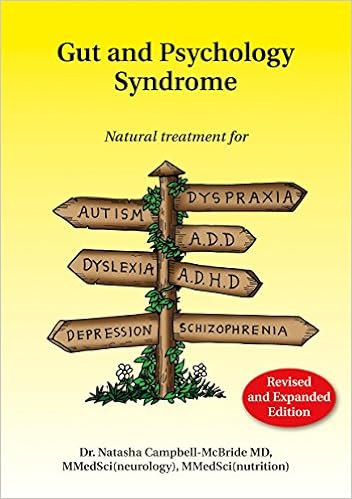
I understood the basic principles of the microbiome but had never actually read the GAPS book.


                                                        Image result for GAPS BOOK


I'm someone who need to understand the 'why' before I jump in. If I was going to attempt a diet as restrictive and time intensive as GAPS I needed to understand the science behind it.


The basic science


Your immune system is in your gut.  Your gut and brain are connected. 

If your gut health is poor then your health is unlikely to be optimal. 


Diet and lifestyle factors have a direct influence on the good or bad bacteria in your gut. Eat bad food then you end up with more bad bacteria than good. Eat good foods particularly foods with live bacteria (e.g probiotics, fermented foods) then you feed the good guys. 


More good bacteria equals a healthy gut and a healthy gut equals a healthy brain. 


I knew Emma had lots of inflammation in her body which included in her brain. Science has always believed that the brain was incapable of being 'inflamed'....turns out they just discovered they were wrong. This diet reduces inflammation in the body by healing the gut.


WARNING - This diet is hard work. 


I only attempted it because I have my best buddy (my thermomix) to help me out. It requires LOTS of cooking and food preparation and organisation (not my strong suit). 


BUT.....It has been sooo worth it!


Why?


After the initial detox which was horrendous we noticed improvements in Emma's social skills. She became more aware of other kids and started finding ways (without words) to interact with them. This was exciting - an obvious change. 


It has also helped my other kids by beginning to heal their leaky guts. How do I know? Because after years of being the same weight they have stacked on the kilo's in just 8 weeks! We have also not had one tummy ache since starting the diet and kids just seem happier. 


I've been doing it too - and it feels awesome. 


In my humble opinion, if you haven't experienced success with other 'diets' then GAPS is one worth exploring for your family especially if there are special needs or health issues.


Although I believe a holistic approach is best in recovering special kids I've seen firsthand that diet is crucial in working towards healing. 


Be encouraged xo 


Wednesday, December 28, 2016

Emma's Progress - 6 months on..........


When we began Emma's NACD neurodevelopmental program in July, I planned to blog once a month. Little did I know that with the demands of the program I would struggle find time to eat let alone sit down at the computer to write. 

So...better late than never! 

Emma is making progress but admittedly, at a slower pace than I would like. But I am also (slowly) learning to celebrate the 'little things' and find joy even in the darkest moments.

There is so much more to this 'program' than the work and learning. I feel like everyday I go into battle for Emma. It's not easy. It's not always fun. But the hope that we will 'win' this battle is what keeps us moving forward. 


Emma's Progress


Significant improvements in muscle tone 


Since beginning the deep pressure and movement exercises as part of her program Emma is no longer floppy AT ALL and noticeably stronger. 


Significant improvements in motor planning / coordination / balance


Emma used to fall over constantly. She would walk into things, trip over things but not anymore! She now has good body awareness and is significantly more confident with climbing, playing on the playground and can now carry things without toppling over. She has started trying to stand on one leg and often tries to imitate dance moves she sees when watching music videos. 

Just this week she jumped for the first time (using 2 feet) on the trampoline! 


Improvements in receptive language


After feeling like she was never going to get it, Emma has begun processing 2 pieces of information. She is also able to recognize over 100 flashcards whereas before we started the program I was unsure of how many pictures / objects she recognized if any.

Improvements in auditory processing


We are finding Emma is responding more consistently to requests and is processing information quicker.

She hears everything without her hearing aids and often tells me if she 'hears' something by looking at me and putting her hands near her ears. This morning as we did our running she did this when she heard a dog bark in the distance. 6 months ago she wouldn't have been as 'tuned' in to hear the sounds around her.


Improvements in social Skills 


After starting the GAPS diet in October we began noticing improvements in her social skills particularly her ability to interact with other kids. Adults are mostly kind and patient but generally young kids are not so it is very difficult for a child like Emma to engage in meaningful interactions with other kids. But now she is initiating social interactions and is able to 'maintain' interaction for a short period of time. She used to engage for 10 seconds and then wander off on her own but we are now noticing she is identifying kids her own age, approaching them and engaging happily in parallel play with the odd moment of co-operative play. 

We also recently saw our first glimpse of 'compassion' where she realised she'd (accidentally) hurt another child and cried along with the hurt child before putting her arm around him as if to say 'sorry'. Gold. 

All of these areas still need work but we celebrate her progress! 

How I manage the program.....


It only took me about 2 days to realise I couldn't do this program on my own.

We now have 3 amazing volunteers who come weekly to help with Emma in various ways depending on their experience and expertise. Their willingness to give of their time to help our family is actually what gives me strength on those dark days. These volunteers help remind me that even when the world seems harsh and unfair there is still goodness.

I admit we still struggle to get all the 'program' done 7 days a week. We are finding that as Emma moves through stages in her development she is becoming more like a 'toddler' and less like a 'baby'. This means meltdowns, tantrums and defiance and boy, is that girl stubborn. There are some days where it takes more like 3 hours to get program done.

We are praying that 2017 will be a year of continued growth and development for Emma but feel we need a miracle when it comes to her speech. So friends, I ask you to join us as a family in praying that our precious girl will find her voice in 2017 and we will be sure to give God the glory for his power at work in Emma's life.

Thank you from the bottom of my heart all for your kind words, prayers and encouragement in 2016. I am truly thankful. 

Happy New Year everyone! xo 

Saturday, October 29, 2016

When Parents Lose Hope.........


Recently in the media we heard about the tragic murder-suicide of a family with two children with autism.

Obviously, it's not okay to kill your children whether they are disabled or not.

But the story is interesting because it came as a shock, a surprise to those who knew the family. Why? Those parents were the 'good ones'. These were the parents who volunteered in the canteen and the classroom. They were the ones that attended school events, lived in a nice home, worked hard and appeared to be coping with the challenge of raising two children with special needs.

It's (generally) not your stereotypical dead beat parents who do this kind of thing. It's the parents who love their kids so much it hurts. It's the parents who have sacrificed for their special needs kids from day 1 because they so desperately want the best for them. It's the ones who've tried to stay positive and put on a brave face during therapy sessions and doctors appointments like they do every. single. week.


How do these things happen? 

The answer is simple  - parents lose hope.


Parents lose hope that the dreams they had for their child will ever be realised. They lose hope their child will live a meaningful life. They lose hope the behaviors will change. They lose hope that all they have sacrificed for their kids counts for something. They lose hope that tomorrow might be easier. Clearly, losing hope has devastating consequences.

Without hope - we die. Not literally but inside. 

Hope is what keeps us moving forward.


Hope is what helps us wade through the uncertainty of what the future holds to a place of rest where no matter what happens, "It's going to be okay".


One of the most challenging experiences I've ever had was working in the children's cancer ward. There were times when we believed in hope that a child would beat the odds - and they did and other times where I comforted parents while they held their dying child. It nearly broke me. Outside I did my job but inside I was struggling because I couldn't see the hope. 

I went to God desperate to understand and he showed me there is always hope but sometimes we need someone else to help us see. I thought there was no hope because the child had died but I learnt there was hope that one day the parents would experience joy again. There was hope that tomorrow would be a little easier than today and that the overwhelming grief wouldn't last forever.

As parents with children with special needs, we need hope like we need air. 

Without it, we die inside and it's hard to keep going. That's how these things happen.

Sometimes the darkness seems all consuming and we can't remember what the light looks like. That's when we need to reach out and ask someone to encourage, pray and remind us that no matter what happens - it's going to be okay. 

There's always hope. Keep going. xo